Lose weight
A measured deficit; without going hungry, without dropping below the safe floor.

Lose weight, maintain your weight, build muscle or gain weight. You choose your goal during setup; your calorie target, portions and macros are calculated from it.
 (opens in a new tab)
Free

Whatever your goal, the plan is built around it; portions and macros are derived from your daily target.
A measured deficit; without going hungry, without dropping below the safe floor.
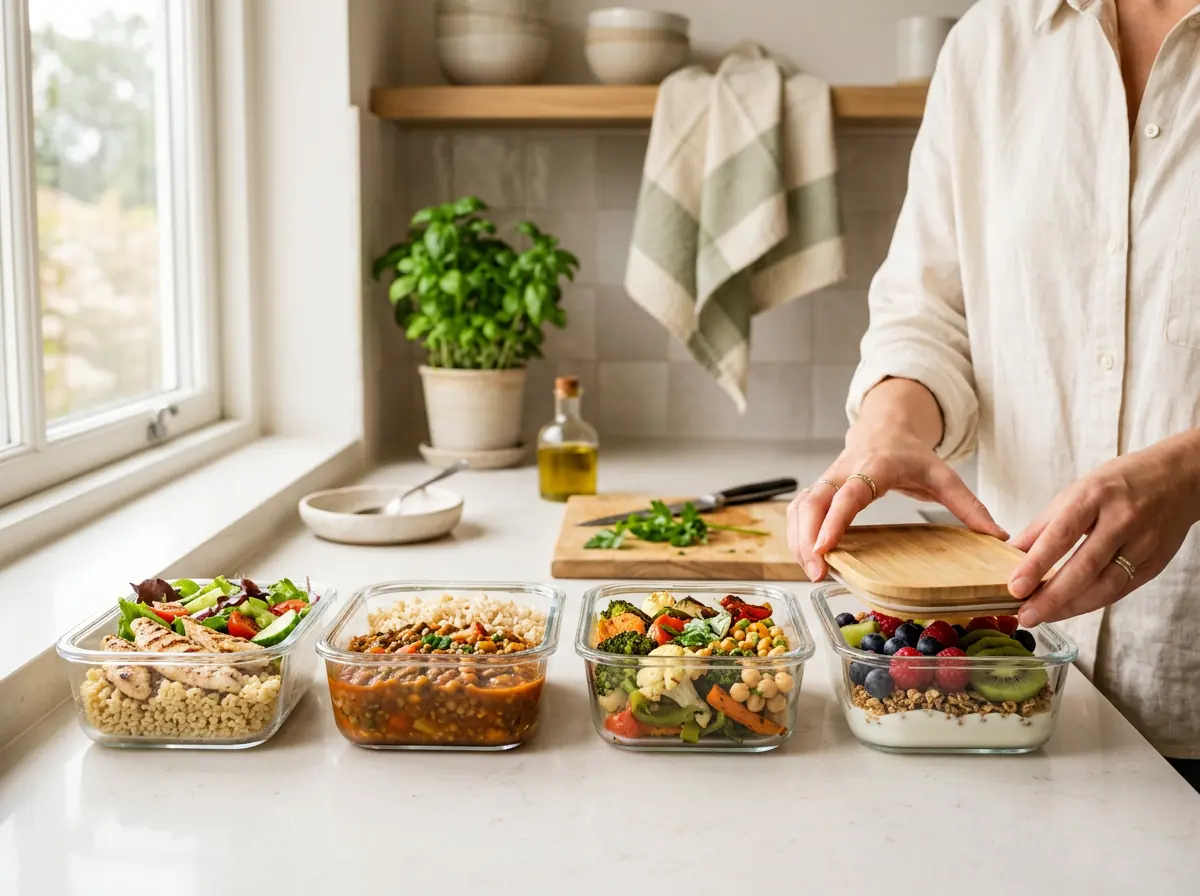
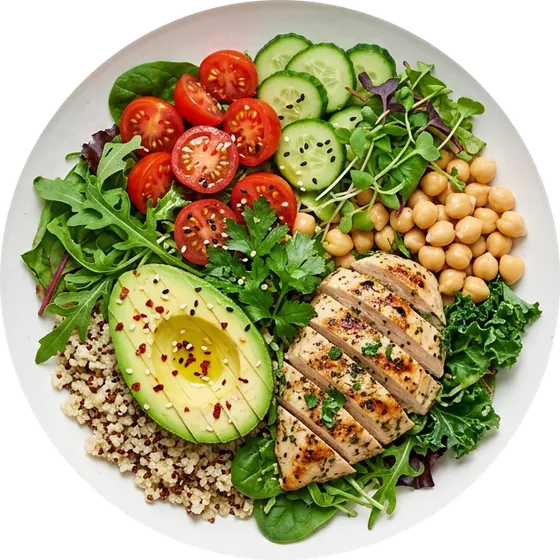
Balanced meals that match your daily requirement.

A protein-heavy plan; the protein grams in each meal are written out.
A calorie surplus, from regular meals rather than empty calories.
First your daily requirement is calculated, then a measured deficit is subtracted from it. The deficit is kept between 15% and 30% of your requirement and never exceeds 1100 kcal a day.
Your target never drops below the safe floor: 1200 kcal for women and 1500 kcal for men aged 19–64. If you're under 19, the calculation is done separately and the deficit doesn't exceed 10%.
The plan is built around this target. Each meal's calories are recalculated from its macros; if the day's total strays from the target, it's corrected.
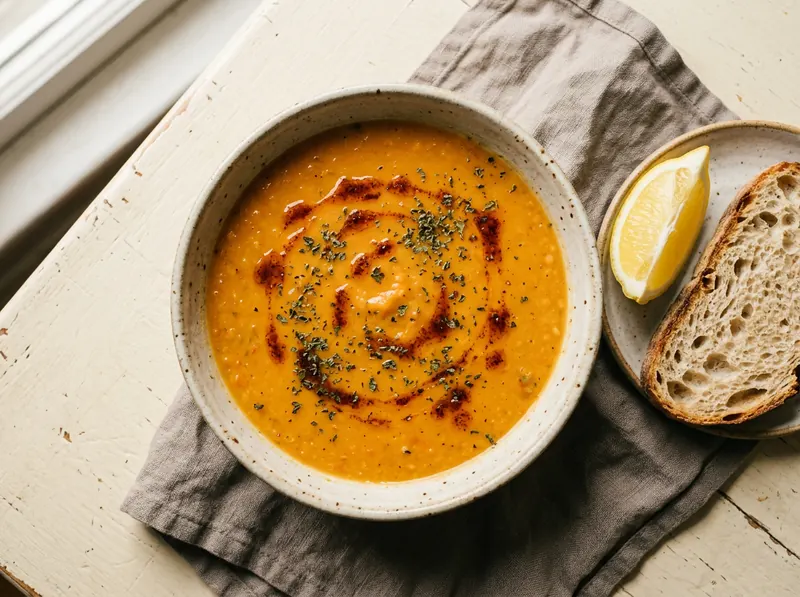
If your aim is to maintain your weight, the plan is built with a target equal to your daily requirement. Balanced meals; not too little, not too much.
Your daily requirement is found by multiplying your basal metabolic rate by the activity factor you choose: between 1.2 and 1.9, from sedentary to very active.
If your height, weight, age or health has changed, keep your profile up to date. Incorrect information directly affects the plan that's generated.
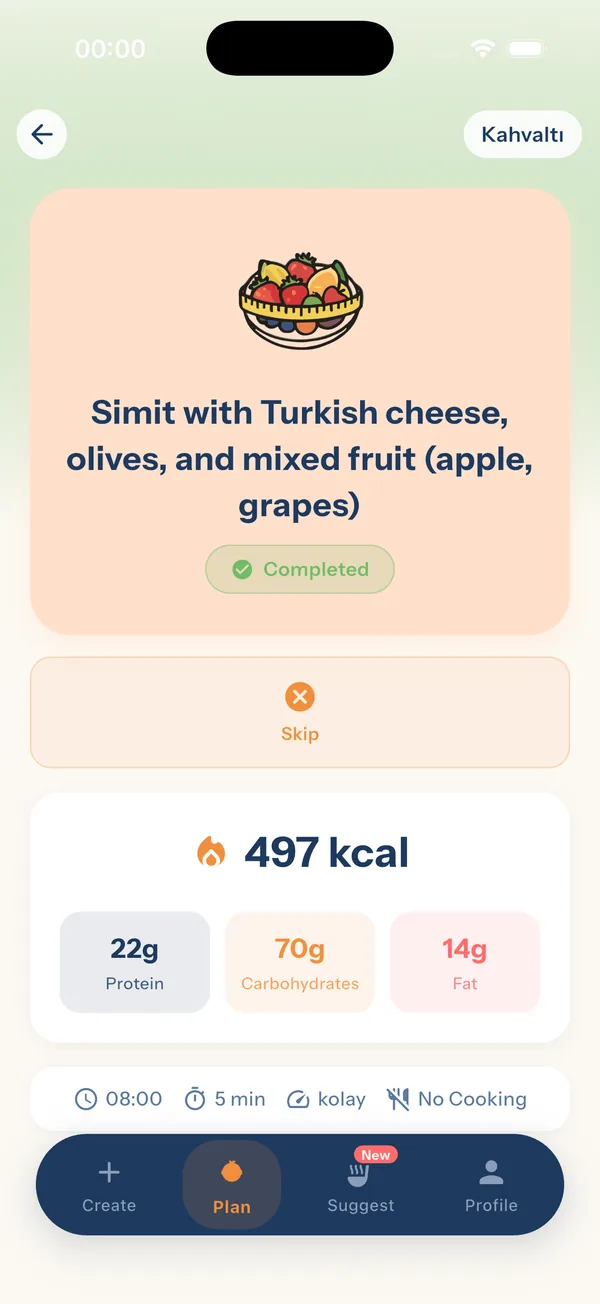
If you chose to build muscle, the plan is protein-heavy. You don't have to guess your protein: the grams in each meal are written out.
When you open a meal, you see its calories, protein, carbs and fat together. After four weeks, your monthly summary lets you follow your calorie and macro trend alongside your weight change.
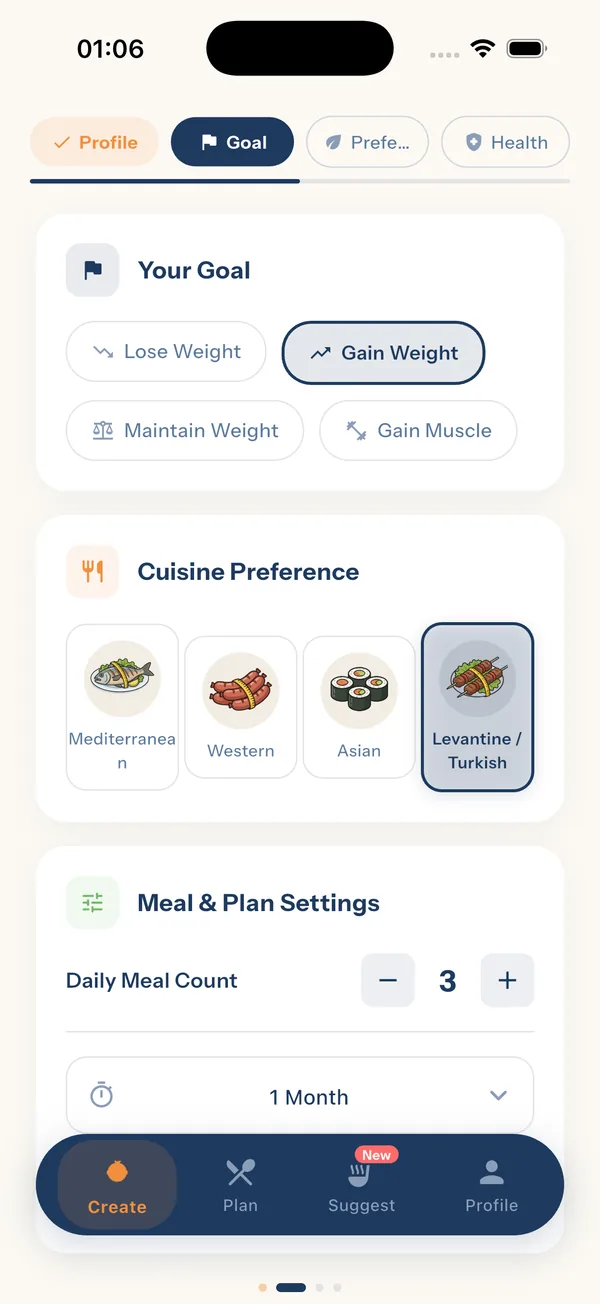
If you want to gain weight, the plan is built with a calorie surplus. That surplus comes from meals at set times spread across the day, not from empty calories.
You set your number of daily meals, your cuisine preference and the foods you like; the plan is built around those preferences.
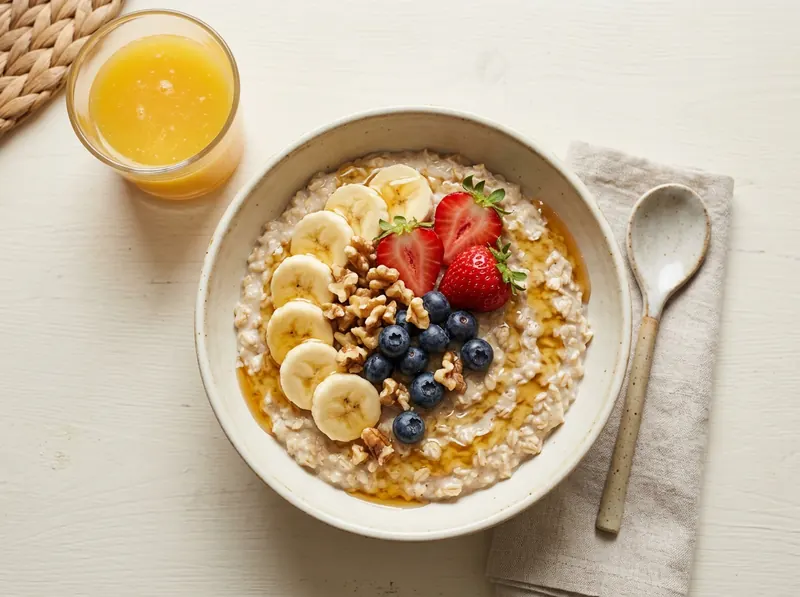
You don't have to give up the food you know: meals come from the cuisine you choose. The diet style, allergens and dislikes you flag are left out when the plan is built.
If you have an allergy, still check what goes into each meal yourself.
YiYo is not a dietitian or a doctor. Plans are for information only and are not a substitute for medical advice.
If you have a health condition: you can flag diabetes, hypertension, cholesterol, celiac disease, thyroid (Hashimoto's) and kidney conditions; they are taken into account when the plan is generated, but the resulting plan is not a medical diet. If you are pregnant or breastfeeding, or have kidney disease, insulin-dependent diabetes or a history of eating disorders, use YiYo under the supervision of a doctor or dietitian.
YiYo is for users aged 18 and over. If you're between 13 and 17, you may use it only with the consent and supervision of a parent or guardian; children under 13 can't use it.

Yes. You choose your diet style and allergens during setup, and the plan is built around them. If you have an allergy, still check what goes into each meal.
You can flag these conditions during setup, and they are taken as input when the plan is generated. But YiYo does not give medical advice: talk to your doctor or dietitian before changing your diet.
The moment you finish the questions, your first weekly plan is ready. Free.
On a computer? Scan it with your phone's camera and the App Store page opens.
YiYo is not a health institution, a dietitian or a medical doctor. The plans it offers are for information only and do not replace medical advice. During pregnancy or breastfeeding, and for people with kidney disease, diabetes that requires medication or insulin, or a history of eating disorders, the app should only be used under the supervision of a doctor or dietitian.